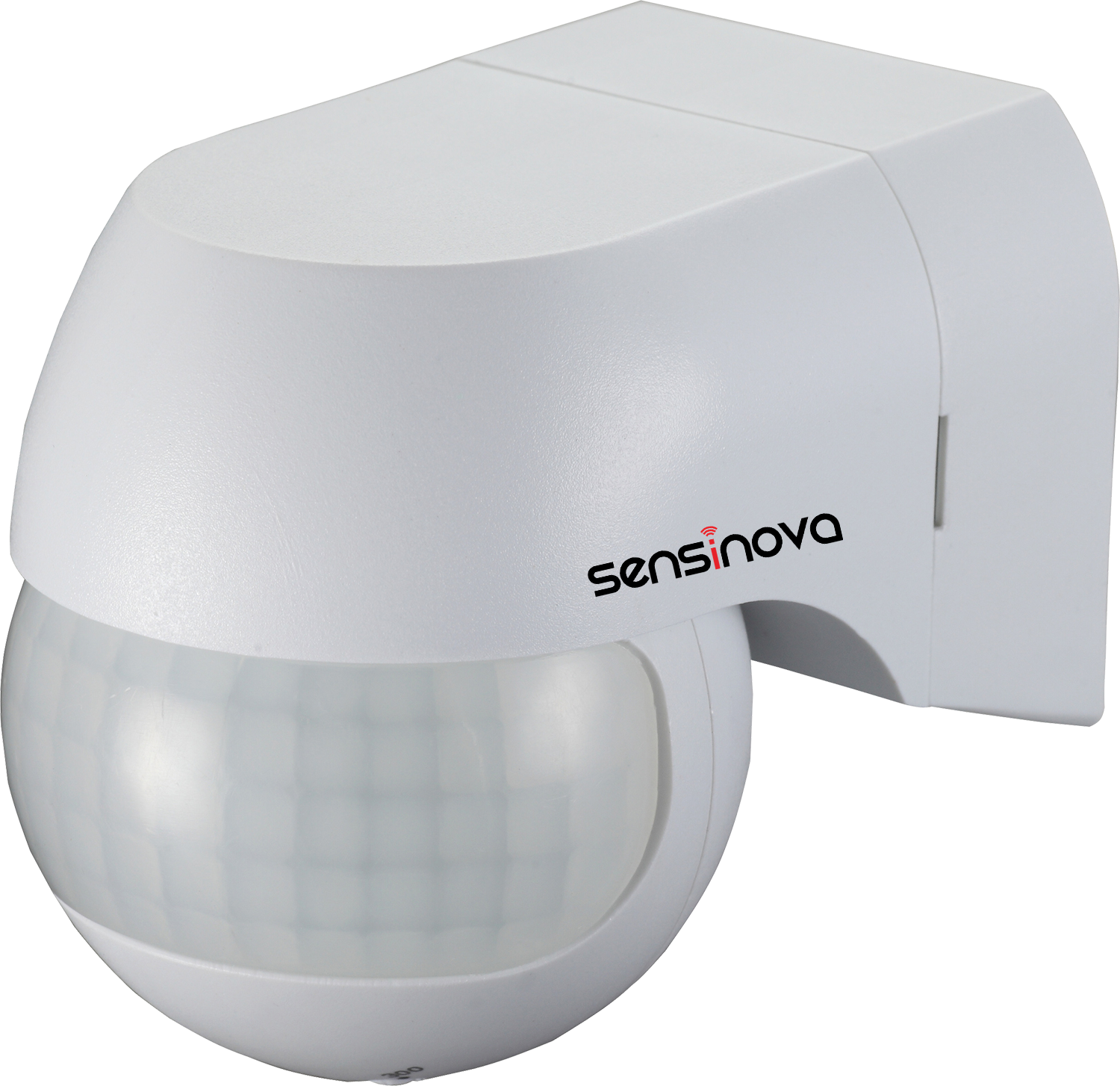
Occupancy sensors sit at the base of most home automation energy strategies. Once a sensor reliably detects whether a room is occupied or empty, an automation controller can adjust lighting, thermostat setpoints, and ventilation rates without requiring manual input from the occupant. The energy savings come from eliminating the intervals when heating, cooling, or lighting runs in a room that no one is using.
Three sensor technologies dominate the residential market in Canada: passive infrared (PIR), microwave Doppler, and dual-technology units that combine both. Each behaves differently in the room geometries typical of Canadian-built homes — layouts that tend to feature separate enclosed rooms rather than the open-plan configurations common in newer American construction.
Passive Infrared (PIR) Sensors
PIR sensors detect changes in the infrared energy emitted by objects in their field of view. When a warm body — a person, a pet — moves through the detection zone, the sensor registers a change and outputs an occupied signal. The key constraint is line of sight: PIR sensors do not detect motion through walls, furniture, or HVAC ductwork, and they cannot detect stationary occupants.
The detection pattern of a PIR sensor is determined by its Fresnel lens configuration. Ceiling-mount PIR sensors used in residential installations typically cover a 6–9 metre diameter at floor level when mounted at 2.4 metres (standard Canadian ceiling height). Corner-mount models with wider-angle lenses can cover an L-shaped room from a single fixture.
Practical Notes for Canadian Homes
Older Canadian homes — particularly those built before 1970 — frequently have plaster-and-lath ceilings rather than drywall. Mounting a ceiling-box sensor in plaster requires a properly rated electrical box and attention to the weight load on the plaster. Surface-wired PIR sensors on wall plates are a more practical option in these cases.
Exterior wall locations should be avoided for PIR sensors unless the sensor housing is rated for temperature variation. Uninsulated exterior walls in Canadian climate zones 5–7 can reach temperatures low enough to affect the thermal contrast the sensor relies on, producing false negatives in rooms that are actually occupied.
Microwave (Doppler Radar) Sensors
Microwave sensors emit a continuous low-power radio frequency signal and detect changes in the reflected wave caused by movement in the monitored space. Unlike PIR sensors, they do not depend on line of sight and can detect motion through non-metallic partitions. They also detect slower movements — a person typing at a desk or breathing — that PIR sensors miss.
The trade-off is sensitivity to movement outside the intended room. A microwave sensor mounted near a shared wall may detect motion in an adjacent space, producing false occupied signals. In detached single-family homes this is rarely a problem, but in semi-detached or row houses common in Toronto and Vancouver, sensor placement needs to account for party wall transmission.
Microwave sensors used in Canada must comply with ISED Canada technical requirements. Sensors sold in the US market at 10.525 GHz operate in a band that ISED permits for industrial and scientific use, but verify the specific model's Canadian compliance documentation before purchase. Several Zigbee-based microwave presence sensors include both FCC and ISED (IC) certification numbers on the device label.
Dual-Technology Sensors
Dual-technology sensors require both the PIR channel and the microwave channel to register a positive reading before outputting an occupied signal. This reduces false triggers — an HVAC draft that might fool a PIR sensor, or slow-moving outside traffic that might fool a microwave sensor, will not produce a false positive if the other channel does not also register.
In a typical Canadian suburban home, dual-tech sensors are most useful in rooms where false positives are costly: a finished basement with a programmable thermostat zone, or a bedroom where unnecessary heating during occupied periods would be noticed. For smaller spaces like bathrooms or utility rooms, a standard PIR sensor is generally adequate.
Wireless Protocols: Z-Wave and Zigbee in Canada
The two dominant wireless protocols for smart home sensors in Canada are Z-Wave (800 MHz and 900 MHz bands) and Zigbee (2.4 GHz). Z-Wave sensors sold in Canada must use the 908.42 MHz frequency, not the 868.42 MHz frequency used in European markets. Purchasing Z-Wave sensors from US retail channels is generally safe since North American Z-Wave devices use the same frequency, but verify the regional variant code on the device documentation.
Zigbee operates at 2.4 GHz, which is the same frequency band as Wi-Fi and Bluetooth. In homes with dense Wi-Fi coverage, Zigbee channel selection matters. Zigbee channels 15, 20, 25, and 26 overlap least with the most commonly used Wi-Fi channels in Canada (channels 1, 6, and 11 on 2.4 GHz Wi-Fi). Most Zigbee coordinators allow manual channel selection.
Integration with Home Assistant and openHAB
Both Home Assistant and openHAB support occupancy sensors through their respective Z-Wave JS and Zigbee2MQTT integrations. Once a sensor is joined to the network and assigned an entity, automations can reference its state directly. A basic "unoccupied for 10 minutes" rule that drops the thermostat setpoint by 2°C in that zone is straightforward to configure in either platform.
The Home Assistant Z-Wave JS integration documentation covers the setup process for USB controllers and the entity naming conventions that occupancy sensor states follow. The openHAB Z-Wave binding documentation provides equivalent information for that platform.
Mounting Position Guidelines
For ceiling-mounted PIR sensors in rooms with standard 2.4 metre ceilings, position the sensor so that the primary traffic path across the room falls within the inner 60% of the detection radius. Mounting a sensor directly above a desk or seating area reduces the chance of false negatives from stationary occupants.
Avoid mounting PIR sensors within one metre of HVAC supply registers. Hot air from a forced-air register crossing the sensor's field of view creates a thermal signature that can trigger false positives. This is a common source of erratic behaviour in Canadian homes with ceiling-mounted supply ducts.
Expected Energy Impact
NRCan's residential lighting guidance estimates that automatic occupancy controls reduce lighting energy consumption by 35–45% in rooms where the lights are frequently left on after occupants leave. For thermostat setback applications, the savings depend heavily on how well-insulated the home is and how extreme the setback is — a 2°C setback in a well-insulated home in Ottawa can reduce heating energy for that zone by 8–12% over a heating season.